


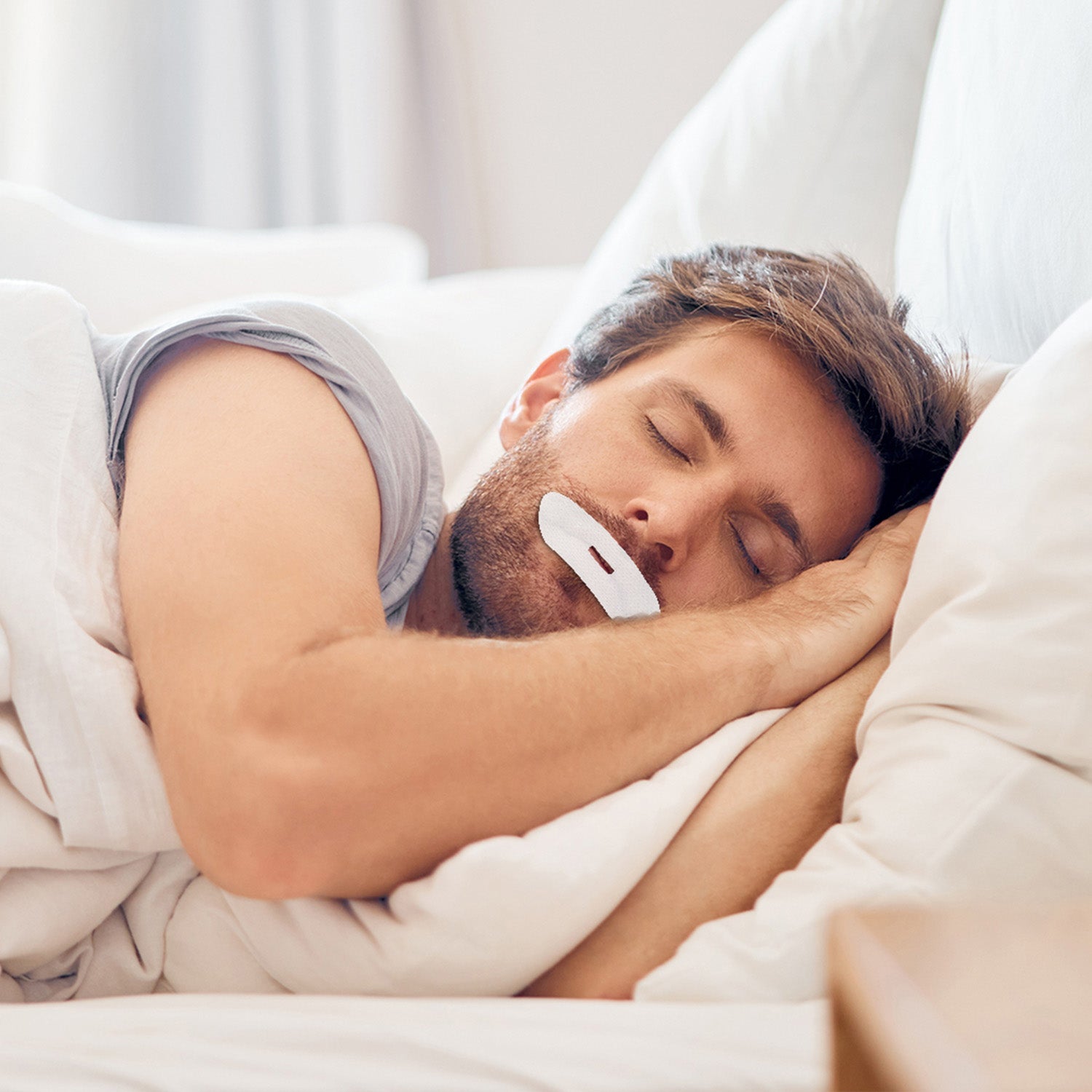
Have you ever woken up with a dry mouth, a tickle in your throat, or fatigue, even after a full night's sleep? It could be that you breathe through your mouth at night. Mouth breathing can not only lead to snoring but also poor sleep quality and long-term health problems. A simple yet effective solution is mouth tape.
In this blog, we discuss what mouth tape is, how it works, and why more and more people are using DreamCare mouth tape for a better night's rest. Curious about our mouth tape? Click here to view DreamCare mouth tape products
What is mouth tape and how does it work?
Mouth tape is a special, skin-friendly tape placed over the lips to keep the mouth closed during sleep. This encourages nasal breathing, which is a healthier and more efficient way to breathe. Nasal breathing helps with oxygen absorption, filtering bacteria, and maintaining optimal humidity in the airways.
When you breathe through your mouth, you miss out on these benefits. Mouth tape forces the body to breathe naturally through the nose, which can contribute to better sleep quality and overall health.
Disadvantages of mouth breathing during sleep
Avoiding mouth tape and continuing to breathe through the mouth during sleep can have some negative consequences:
❌ Increased risk of snoring: Mouth breathing makes the airways more prone to vibrations, which causes snoring.
❌ Dry mouth and bad breath: Because the mouth stays open all night, saliva evaporates faster, leading to a dry mouth and an increased chance of bad breath.
❌ Poorer oxygen intake: Nasal breathing helps with more efficient oxygen absorption and better regulation of carbon dioxide in the blood.
❌ Less restorative sleep: Restless breathing and snoring can reduce sleep quality, leading to daytime fatigue.
❌ Higher risk of dental problems: A dry mouth increases the chance of tooth decay and gum issues due to reduced saliva production.
Benefits of mouth tape during sleep
Mouth tape offers various benefits for both breathing and sleep quality:
✅ Reduces snoring: Much snoring is caused by mouth breathing. Mouth tape helps prevent this by keeping the mouth closed.
✅ Better oxygen absorption: Nasal breathing ensures more efficient oxygen uptake and better blood circulation.
✅ Prevents dry mouth and bad breath: Mouth breathing often leads to a dry mouth, which can cause tooth decay and bad breath.
✅ Deeper and restorative sleep: Because breathing becomes calmer and more stable, sleep quality improves.
✅ May help with mild forms of sleep apnea: Nasal breathing promotes more even breathing, which can help with breathing problems during sleep.
Is mouth tape safe to use?
Mouth tape is safe for most people and has been used for years by those who want to improve their breathing and sleep quality. It is specially designed with skin-friendly materials that stay comfortable throughout the night.
There is also scientific evidence that promoting nasal breathing offers benefits for overall health. However, it is important to use it correctly. Here are some safety guidelines:
- Use skin-friendly mouth tape: Avoid regular, medical, or duct tape, which can cause skin irritation. Choose special sleep-friendly mouth tape that is gentle on the skin.
- Do not use with a blocked nose: If you have a cold or suffer from chronic nasal conditions, mouth tape may not be suitable.
- Start with short use: Apply the tape for a few minutes during the day to get used to it before using it at night.
- Not suitable for severe sleep apnea: People with severe sleep apnea or other breathing problems should consult a doctor before trying mouth tape.
How to use mouth tape correctly?
Proper application of mouth tape is essential for a comfortable and effective experience. Follow these steps:
1. Choose the right tape: Use hypoallergenic, breathable tape specially designed for sleep use.
2. Clean your skin: Make sure your lips are dry and clean for better adhesion.
3. Apply the tape correctly: Gently press the tape over the center of your lips without pulling too tight. Some tapes leave a small opening for extra comfort.
4. Get used to the feeling: Wear the tape for a few minutes during the day before using it all night.
5. Combine with a good sleep position: Make sure you sleep on your side or back and use a well-supportive pillow.

The impact of mouth breathing on your health
Mouth breathing can negatively affect your overall health. When you constantly breathe through your mouth, it can lead to increased stress levels because the breathing becomes shallower and the body absorbs oxygen less efficiently.
It can also reduce lung capacity and contribute to increased heart rate and blood pressure. Prolonged mouth breathing can raise the risk of respiratory infections because the nose normally acts as a filter against harmful bacteria and allergens.
Learning nasal breathing with the help of mouth tape can help reduce these health issues and contribute to better breathing and overall well-being.
Alternative methods to reduce mouth breathing
Besides mouth tape, there are several other ways to reduce mouth breathing during sleep. Breathing exercises help train nasal breathing and can contribute to better breathing techniques.
In addition, nasal strips can be used to open the nostrils and improve airflow, reducing the need to breathe through the mouth. Adjusting sleep position, such as sleeping on your side instead of your back, can also help keep the airways open and reduce mouth breathing.
Finally, improving the air quality in the bedroom, for example by using a dehumidifier or air purifier, can contribute to freer nasal breathing and a more comfortable sleep.
Frequently asked questions about mouth tape
1. Can mouth tape help with snoring? Yes, mouth tape helps reduce snoring by keeping the mouth closed and promoting nasal breathing. This keeps the airways more open and reduces the chance of vibrations that cause snoring.
2. Is mouth tape suitable for people with allergies? Many mouth tapes are hypoallergenic and specially designed for sensitive skin. However, it is important to test a small patch of skin to check for possible reactions.
3. Can I use mouth tape if I have a cold? If your nose is blocked due to a cold, it can be difficult to breathe comfortably through your nose. In that case, it is advised not to use mouth tape until your airways are clear.
4. How long does it take to get used to mouth tape? Most people get used to using mouth tape within a few nights. Start with short periods during the day to familiarize yourself with the sensation before wearing it all night.
5. Can mouth tape be used by children? Mouth tape is generally not recommended for children under 12 years old without consulting a doctor. For younger children, alternative methods like breathing exercises may be a better solution.
6. Does mouth tape work with a mustache? Yes, mouth tape can also work for people with a mustache, but the adhesion may be weaker depending on the density of the facial hair. It can help to trim the mustache slightly or choose a tape with stronger adhesive power specially designed for use on facial hair.
Conclusion: Better sleep with mouth tape
Mouth tape is a simple but effective way to improve your breathing and sleep quality. By encouraging nasal breathing, it helps reduce snoring, promotes deeper sleep, and contributes to healthier breathing.
Want to experience it yourself? Discover the best mouth tape products and enjoy a better night's sleep!
Sleep better, breathe healthier, and wake up refreshed with DreamCare mouth tape!


Share:
How Your Bedroom Environment Affects Your Sleep
Sleep without noise: How the Anti-Snoring Pillow can save your night's rest