


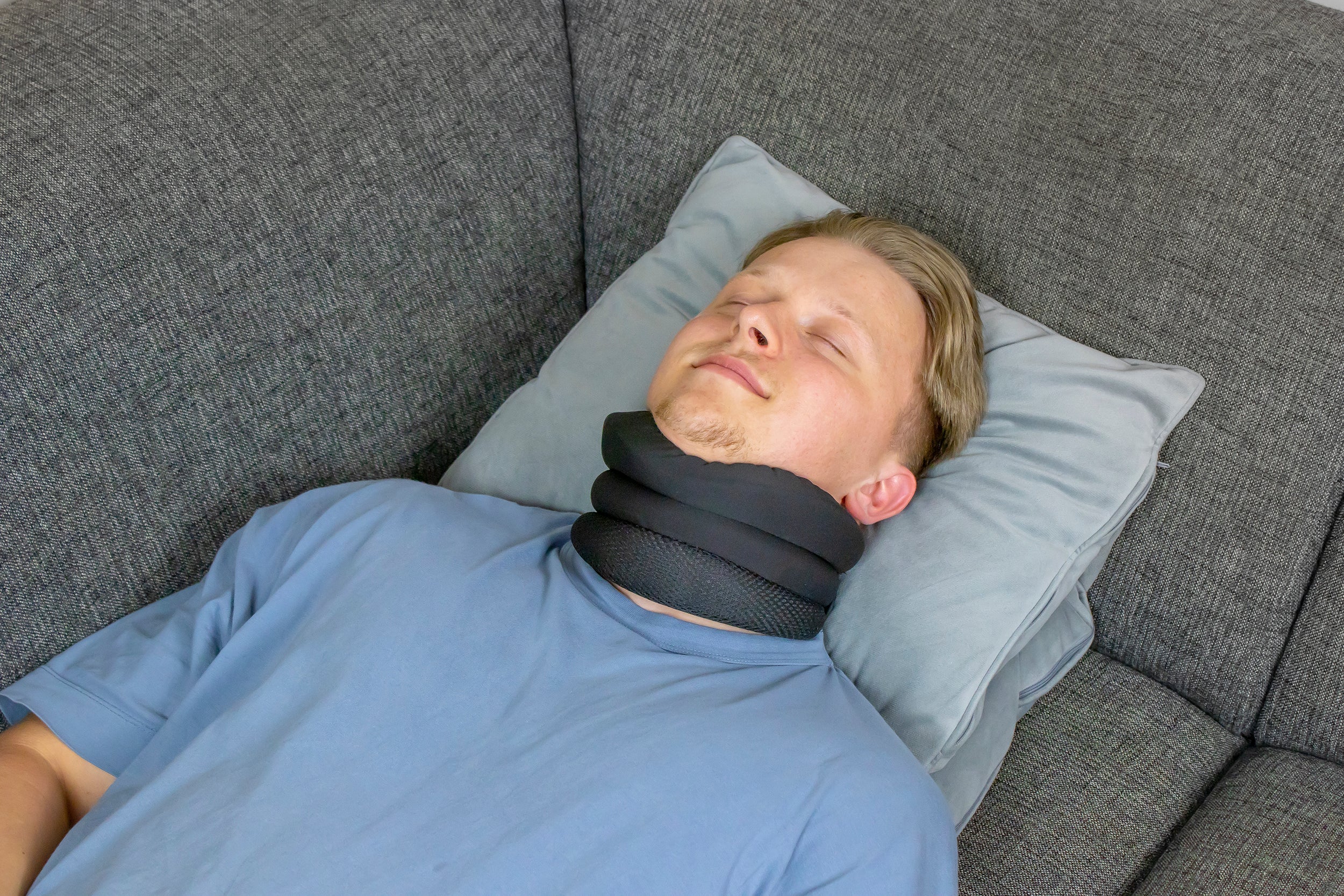
It is the middle of the night and your partner is sound asleep. But suddenly, a loud, hoarse sound breaks the silence. It’s not thunder or a roaring engine outside – it’s snoring. An invisible enemy that steals restful sleep, tests relationships, and can even endanger health. It’s not only annoying for the person who snores but also for their partner, family members, and housemates. Additionally, snoring can seriously disrupt sleep quality, lead to chronic fatigue, and even contribute to serious conditions like sleep apnea and heart problems.
In a world where innovative solutions are becoming the norm, the Anti-Snore Pillow is a smart and effective way to tackle this problem. In this blog, you’ll discover how this revolutionary pillow can help you sleep quieter and deeper.
Why do we actually snore?
Snoring occurs when the airways are partially blocked during sleep. This can have several causes:
- Incorrect sleeping position – Sleeping on your back can cause the tongue and soft tissues to fall backward, narrowing the airways.
- Overweight – Extra fat tissue around the throat can compress the airways, making breathing harder and causing snoring. Losing weight can have a positive effect.
- Nasal congestion due to allergies or cold – A blocked nose forces someone to breathe through the mouth, which can cause snoring. Using a nasal spray or humidifier can provide relief.
- Smoking – Cigarette smoke irritates and swells the airways, which can worsen snoring. Quitting smoking can improve breathing.
- Aging – As we get older, the muscles in the throat relax, which can cause snoring. Specific throat muscle exercises can help.
- Anatomical factors – Some people naturally have an enlarged uvula or tonsils that block the airways. In extreme cases, medical intervention may be necessary.
These blockages cause a vibrating sound – snoring. Fortunately, the right support can help keep the airways open and reduce snoring.
How does the Anti-Snore Pillow work?
The Anti-Snore Pillow is specially designed to optimize sleeping position and keep the airways clear. This happens in several ways:
- Ergonomic design: The pillow supports the head and neck in a way that keeps the airways open.
- Encourages side sleeping: It promotes side sleeping, which is scientifically proven to help reduce snoring.
- Pressure-relieving foam: Helps maintain a comfortable and natural position without muscle strain.
This pillow not only offers comfort but also contributes to a snore-free night. Our anti-snore pillow is designed to help you sleep comfortably and without snoring throughout the night. The ergonomic pillow provides the right support for the neck and head, keeping your airways clear and helping you fall asleep more easily. This way, you enjoy a snore-free night’s rest, fall asleep faster thanks to optimal support, and improve your sleep quality so you wake up feeling fresher and more energetic.
The benefits of the Anti-Snore Pillow
This innovative pillow has multiple benefits:
- Reduces neck and back pain – Proper support helps reduce tension in muscles and joints.
- Suitable for various sleeping positions – Whether you sleep on your side, back, or stomach, the pillow adapts to your posture.
- High-quality materials – Made from breathable and durable materials for long-lasting comfort.
- Hypoallergenic and hygienic – Prevents buildup of dust and allergens, ideal for people with allergies.
Extra tips for a snore-free night
Besides using the Anti-Snore Pillow, these tips can help reduce snoring:
- Sleep on your side instead of your back – For example, try placing a pillow behind your back to stay on your side.
- Avoid alcohol and heavy meals right before bedtime – Alcohol relaxes the throat muscles, which can worsen snoring. A light meal a few hours before sleeping helps keep breathing clear.
- Keep your bedroom well ventilated and free of allergens – Dust and allergens can irritate the nose and throat, causing snoring. Regular airing and an air purifier can help.
- Drink enough water to prevent a dry throat – Dehydration can make mucus in the throat thicker, worsening snoring. Make sure to drink enough water throughout the day.
Invest in a quiet night
Snoring doesn’t have to be a problem anymore! With the Anti-Snore Pillow you ensure better sleeping posture, less snoring, and a deeper rest – for yourself and your partner. Do you also want to enjoy a quiet and refreshed night?
Order now and wake up fresh and energized!


Share:
Mondtape: The surprising solution for better breathing during sleep
From night owl to morning champion: 5 common mistakes in sleep training