


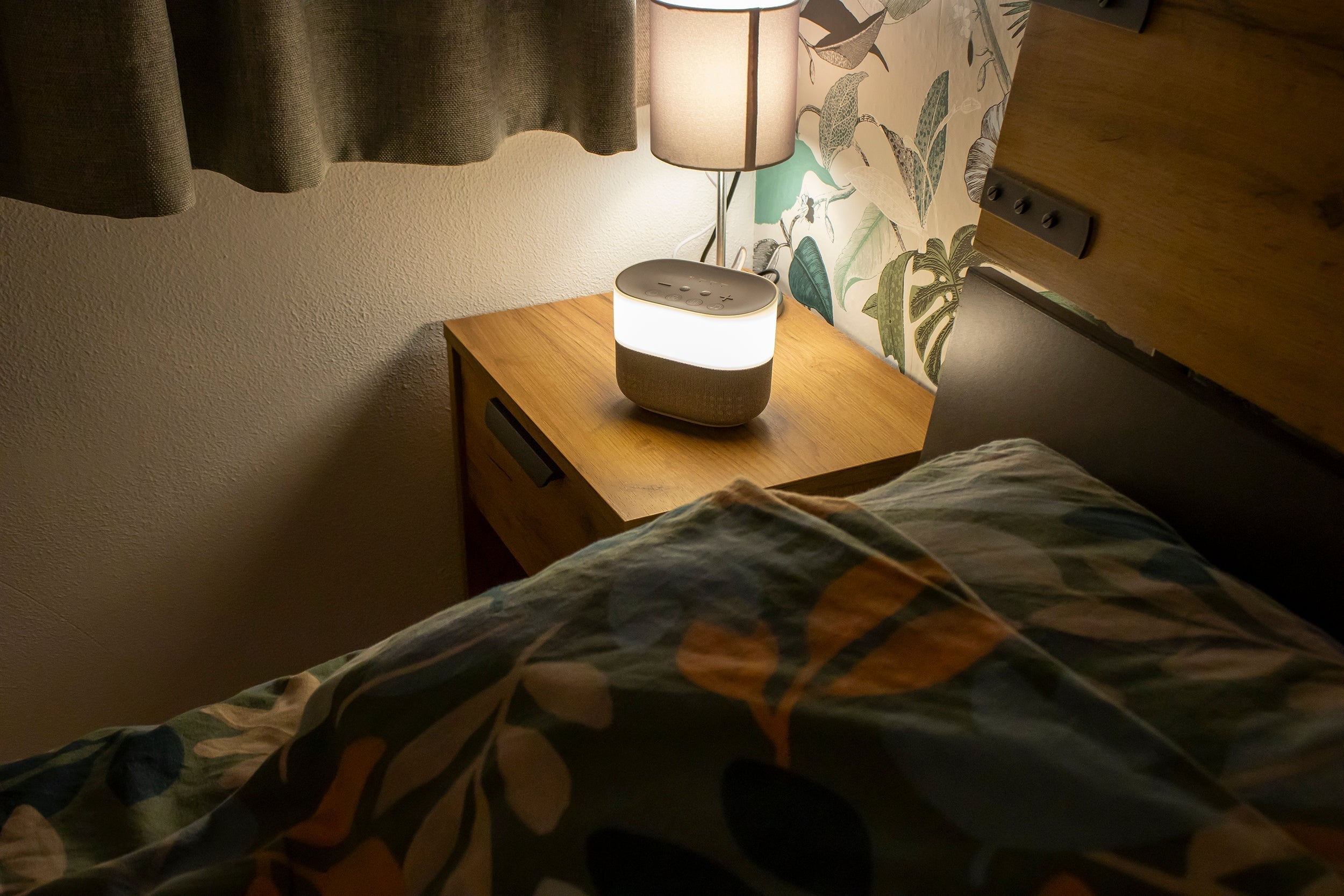
A good night's sleep starts with an optimal sleep environment. The way your bedroom is arranged and the environmental factors involved can have a big impact on the quality of your sleep. In this blog, we discuss the key elements you can adjust to optimize your sleep environment.
1. Temperature: not too warm, not too cold
The ideal bedroom temperature is between 16 and 18 degrees Celsius. A room that is too warm or too cold can disrupt your sleep because your body temperature fluctuates throughout the night. Use well-ventilated blankets and adjust your sleepwear according to the seasons.
2. Lighting: dim the lights before bedtime
Light plays a crucial role in regulating your biological clock. Bright light, especially from screens like phones and tablets, can disrupt the production of melatonin, the hormone that helps you fall asleep. Use warm, dimmed lighting in the evening and consider blackout curtains to minimize light pollution from outside.
3. Noise level: promote calm and silence for better sleep
Noise can significantly reduce your sleep quality. Do you live in a busy area? Then consider earplugs or a white noise machine to mask disturbing sounds. White noise helps create a constant sound background that is soothing.
4. Bedroom decor: minimalism promotes relaxation
A cluttered bedroom can unconsciously cause stress and restlessness, negatively affecting your sleep. Keep your room tidy and minimalist with soft colors and calming decorations. Plants like lavender and aloe vera can also contribute to a soothing atmosphere.
5. Mattress and pillows: comfort is essential
A good mattress and the right pillows support your body and reduce physical complaints. A mattress typically lasts 7 to 10 years, so make sure to replace it in time. Choose a pillow that suits your sleeping position to prevent neck and back pain.
6. Screen use: limit blue light
Phones, tablets, and TVs emit blue light, which suppresses melatonin production. Try to avoid screens at least an hour before bedtime. If you still want to read something, choose a paper book instead of an e-reader with bright light. You can also often set a blue light filter on your device to reduce exposure to bright light.
Conclusion
Your bedroom is a place to relax and unwind. By optimizing temperature, lighting, sounds, decor, and your sleep gear, you can significantly improve the quality of your sleep. Small adjustments can make a big difference and contribute to deeper, more refreshing rest.
Want to take your sleep improvement a step further? Snoring can have a big impact on both your sleep quality and that of your partner. Check out this blog post with the top 3 anti-snoring products and discover which solution suits you best!


Share:
How stress affects your sleep and what you can do about it
Mondtape: The surprising solution for better breathing during sleep